
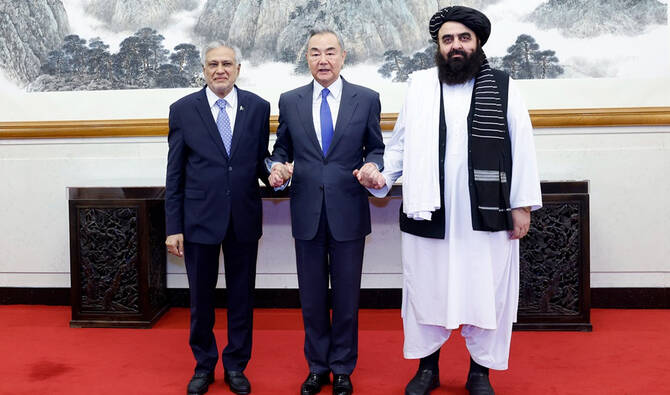
Amir Khan Muttaqi, the IEA’s Foreign Minister, described the outcome of the talks with Pakistan as “good”. During a meeting with Zhao Xing, China’s ambassador in Kabul, Muttaqi discussed the negotiations hosted by China in Urumqi, which aimed to end the conflict between the Afghanistan and Pakistan. Muttaqi expressed hope that “minor differences” would not deter the progress of these talks.
KABUL POST - The Foreign Ministry also posted a message on its X account stating that Muttaqi assured representatives from Central Asian countries that the IEA would not allow any party to use Afghanistan’s territory to threaten its neighbors, the region or the world, stating that “Anyone who seeks to threaten regional security will not be tolerated by us”. The Pakistani air and ground attacks on various parts of Afghanistan, began in February after Islamabad repeatedly accused the IEA of sheltering and supporting the TTP, a claim the IEA has constantly denied.
China’s Foreign Ministry reported that Afghanistan and Pakistani representatives agreed in the Urumqi talks to deescalate tensions and find a “comprehensive solution” to the dispute. Chinese spokesperson Mao Ning added that all parties (Afghanistan, China and Pakistan) acknowledged that “terrorism is the main issue impacting” Islamabad’s relations with Afghanistan.
OCHA has reported that Pakistan's attacks since late February have led to hundreds of casualties, including children and a humanitarian worker and displaced more than 94,000 people in Khost, Kunar, Nangarhar, Paktia and Paktika provinces. OCHA also stated that clashes between IEA forces and Pakistani military personnel along the hypothetical line has blocked access to districts in Nuristan making it difficult to deliver aid to about 100,000 people in those areas.